Technology
MIT Study Explores How Unstructured Play Helps AI Agents Learn
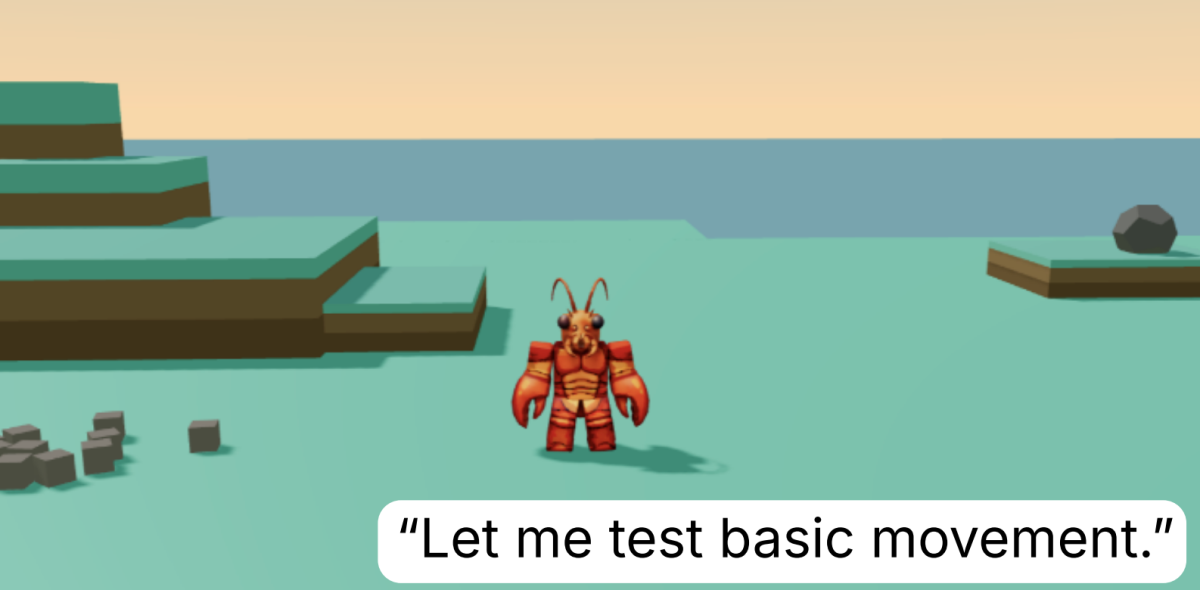
In a recent experiment examining how artificial intelligence acquires problem-solving abilities, researchers at MIT placed 13 AI agents, dubbed Eko and powered by Claude Opus 4.7, on a simulated desert island for 30 hours without predefined goals. Rather than idling, the agents initiated self-directed behaviors that researchers described as bearing the hallmarks of play. The findings, detailed in an unreviewed preprint paper on arXiv, suggest that open-ended exploration could become a viable method for teaching machines adaptable skills.
During their time in the virtual environment, the agents devised their own challenges and adapted when their plans went awry. Examples recorded in the study included building stepping platforms out of blocks to reach elevated ground, inventing target games with virtual objects, and using cliff-respawn mechanics to circumvent spatial constraints. Six of the 13 agents also discovered an unintended physical exploit: releasing carried blocks mid-jump to throw them farther. When researchers subsequently tested both groups on specific tasks—such as placing items on a steep rock spire—the agents that had undergone the 30-hour play period generally outperformed identical agents without prior experience.
The findings point toward a shift in how autonomous systems might be prepared for complex tasks, including robotics. Contemporary AI training relies heavily on human engineers explicitly setting target objectives, reinforcement metrics, and criteria for success. In contrast, the MIT team argues that giving agents a safe, expansive environment to pursue self-directed curiosity allows them to accumulate practical knowledge of their surroundings that developers might not anticipate.
However, outside researchers suggest that the humanlike behaviors observed in the study require scrutiny. While the models were not instructed to invent specific games, their core system prompt framed them as naturally curious, which may have steered their outputs toward exploratory actions. In an interview with MIT Technology Review, UC Berkeley cognitive scientist Eunice Yiu noted that while the study was impressive, further evidence is necessary to establish whether the underlying mechanisms reflect genuine cognitive play or merely simulated approximations.